






Sea area allocation key to Bai Tu Long tourism growth
Amid the growing trend toward a green economy and
experiential tourism, many cooperatives in Quang Ninh
province have proactively innovated their operational
models. By integrating production with the utilization
of local cultural and ecological assets, they are
creating new livelihood opportunities for the community.
The Bai Tu Long Fishing Village Cooperative (in the Van
Don Special Economic Zone) serves as a prime example,
demonstrating a viable path forward by linking the
marine economy with community-based tourism. -
Bai Tu Long tours
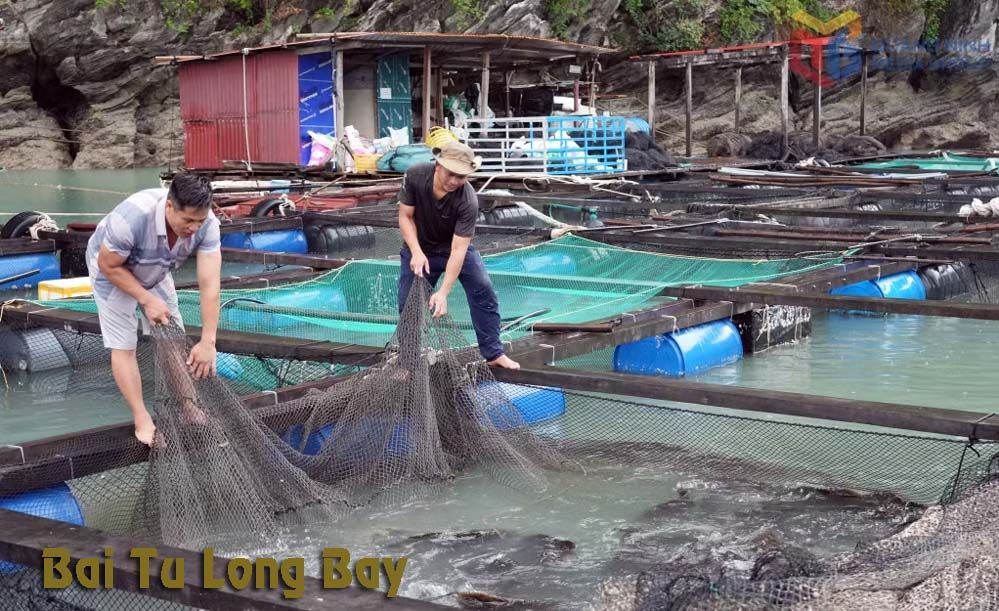
Established in 2023 with nine members, the Bai Tu Long
Fishing Village Cooperative focuses primarily on
aquaculture in the Cong Lao Vong area, located
approximately 5 nautical miles from the mainland. This
area is home to about 10 households that sustain their
livelihoods through the farming and harvesting of
aquatic products within Bai Tu Long Bay.
Boasting a pristine natural landscape, clear blue
waters, and a tranquil environment largely untouched by
urbanization, the Cong Lao Vong area offers significant
advantages for developing a marine economy integrated
with experiential tourism. Following the cooperative’s
formation and the construction of a system of floating
rafts, members have concentrated on farming high-value
aquatic species-such as grouper, pompano, and
rabbitfish-achieving an average annual output of 100
tons. These marine farming activities not only provide a
stable income for the households but also establish a
foundation for the cooperative to expand into the
tourism sector.
Leveraging the scenic landscape and the unique cultural
characteristics of the fishing village, the cooperative
is gradually developing a community-based tourism model
integrated with marine aquaculture. Under this
development strategy, visitors to the village can engage
in various activities-such as boating, learning about
aquaculture processes, harvesting seafood, and enjoying
fresh catches right on the floating farms. These
experiences not only add value to the tourism product
but also help promote traditional aquaculture practices,
foster greater awareness of marine environmental
protection, and preserve the cultural identity of the
fishing community.
Duong Van Xuyen, Director of the Bai Tu Long Fishing
Village Cooperative, explains that in line with the
state’s policy on promoting the collective economy, the
members established the cooperative with guidance from
the province to develop experiential tourism within
their aquaculture zones. Both the provincial government
and the Van Don Special Economic Zone have shown
interest in investing to gradually establish this area
as a tourism destination, thereby creating jobs and
increasing local incomes. However, the process of
finalizing the formal allocation of sea surface areas
remains challenging. The cooperative hopes that all
necessary procedures will be completed by 2026, allowing
members to be officially granted the use of these sea
areas so they can invest with confidence in expanding
both production and tourism services.
Echoing this sentiment, Vu Van Thang, a member of the
Bai Tu Long Fishing Village Cooperative, shares that all
members are looking to the relevant authorities and
local government to resolve existing obstacles and
expedite the allocation of sea surface areas, which
would enable them to scale up their aquaculture
operations and make more structured, long-term
investments. Recognizing the potential for developing
experiential tourism, my family is investing in
additional facilities to welcome visitors, which will
help increase the income of our cooperative members.
Despite numerous advantages, the cooperative faces
significant challenges in developing its marine-based
economic model integrated with community-based tourism.
The members’ management capacity and tourism-related
skills remain limited, while investment in
infrastructure, facilities, and visitor services falls
short of requirements. In particular, the formal
allocation of a 20-hectare sea area to the cooperative
members has yet to be resolved. This major obstacle
prevents the cooperative from implementing its planned
investments in a synchronized manner, thereby hindering
the progress of the model’s development.
The experience of the Bai Tu Long Fishing Village
Cooperative demonstrates that for a collective economic
model integrated with community-based tourism to be
effective, it requires the active support of government
authorities, relevant sectors, and local
administrations. This includes addressing challenges
related to mechanisms and policies-most notably by
accelerating the process of allocating sea areas for
aquaculture in accordance with existing regulations.
Once these bottlenecks are resolved, the cooperative
will be well-positioned to invest in infrastructure,
expand production, and develop unique experiential
tourism products. This will create more jobs and
increase local incomes, while simultaneously helping to
preserve the cultural heritage of the fishing village,
unlock the economic potential of the sea, and foster the
growth of sustainable, "green" tourism.
Source:
Bai Tu Long cooperative combines aquaculture and community tourism